This site is still being tuned — check back soon for more.
← Projects Interior Acoustic Treatment
Hands-On / Craft · 2026

Interior Acoustic Treatment

Ongoing acoustic treatment of a recital hall, built by hand as a thank-you to my teacher.

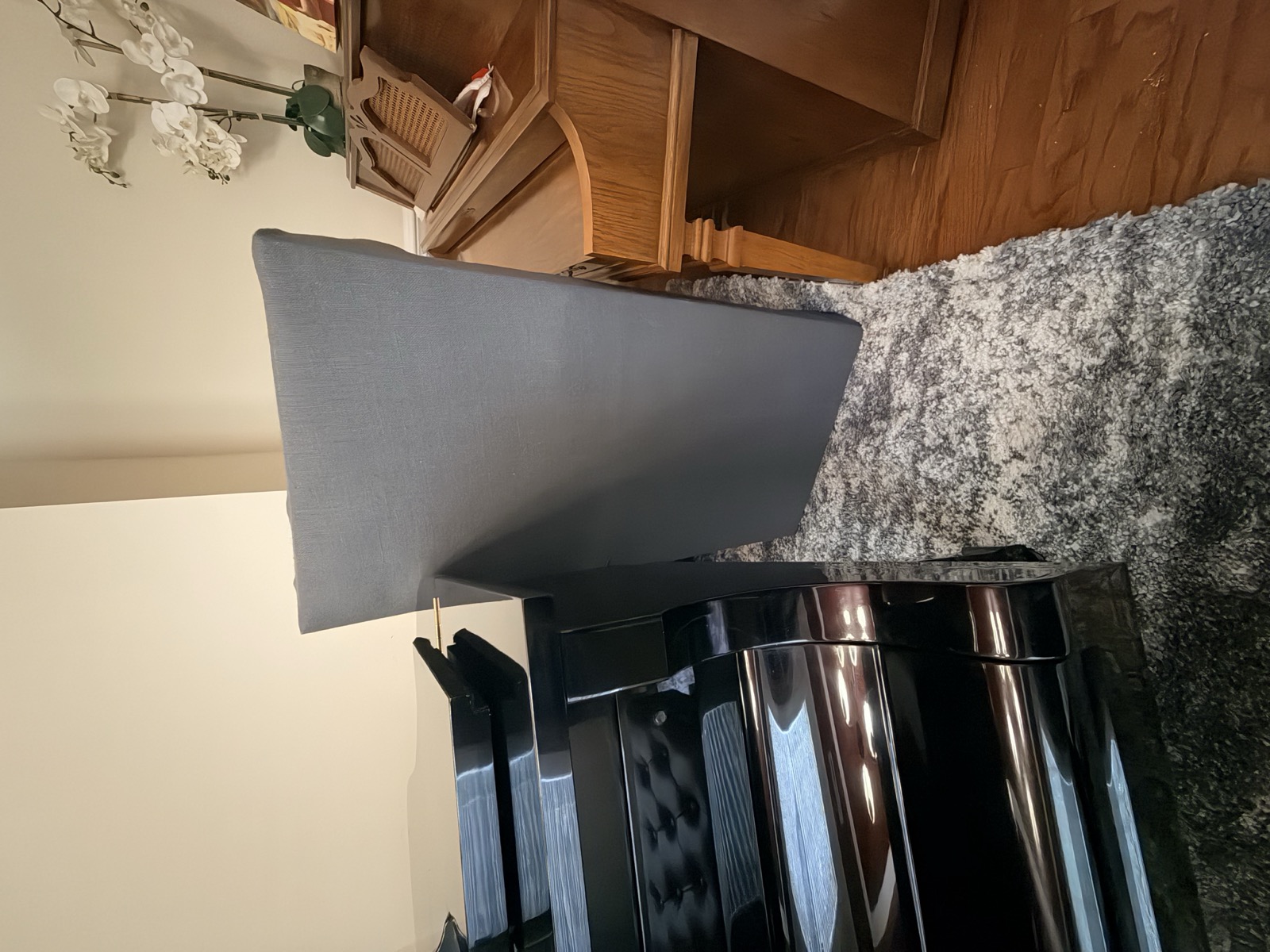
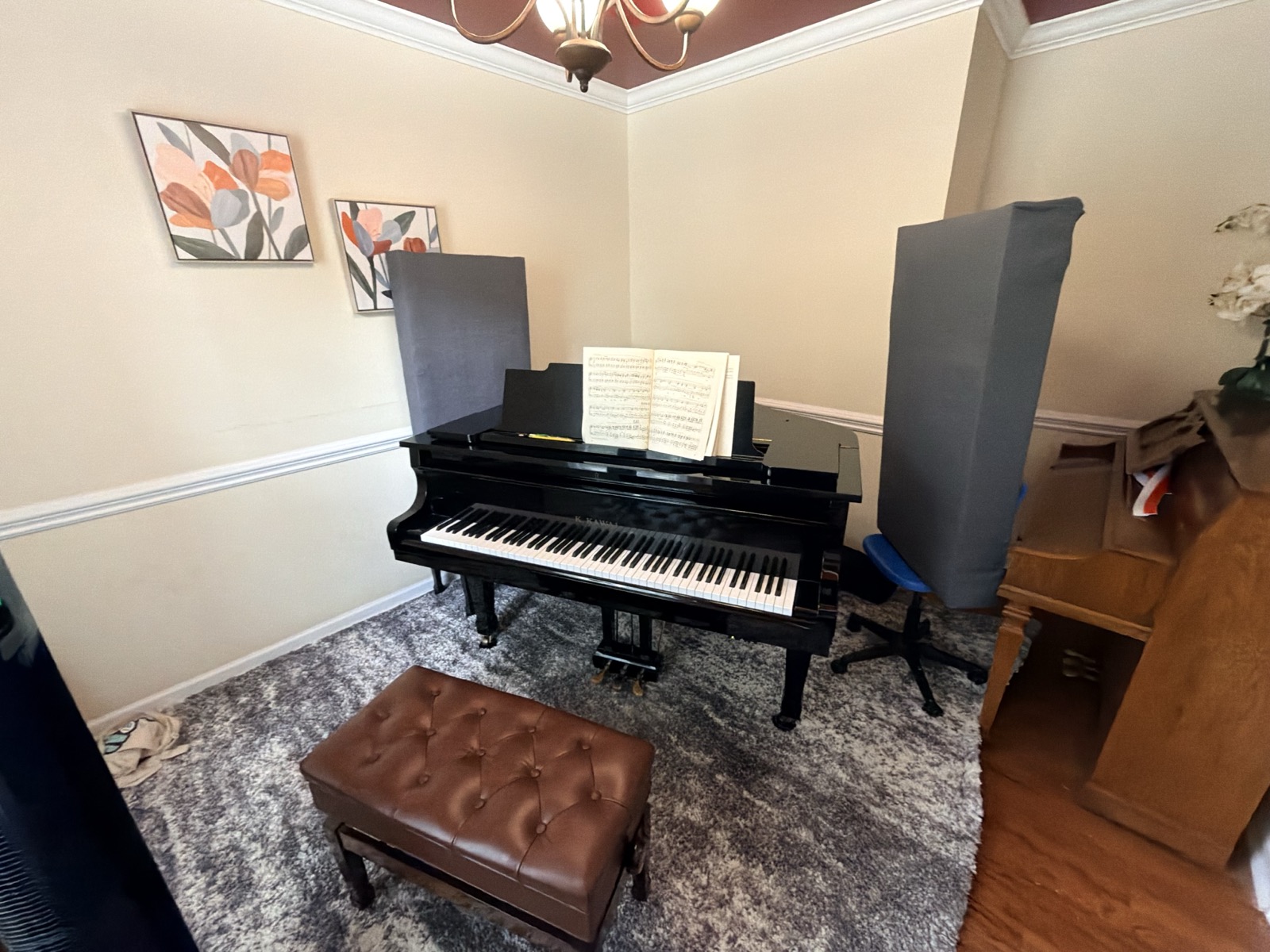
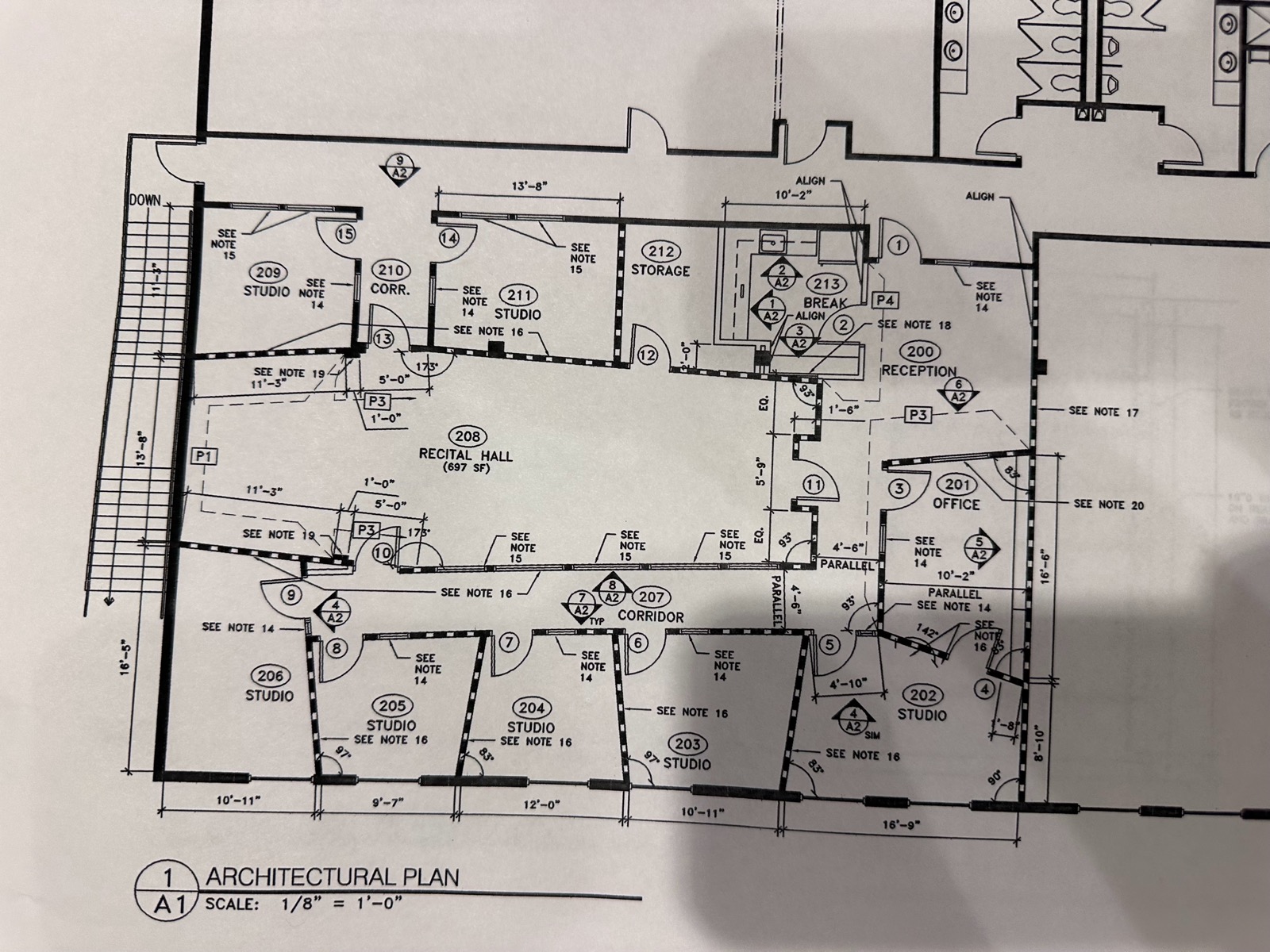
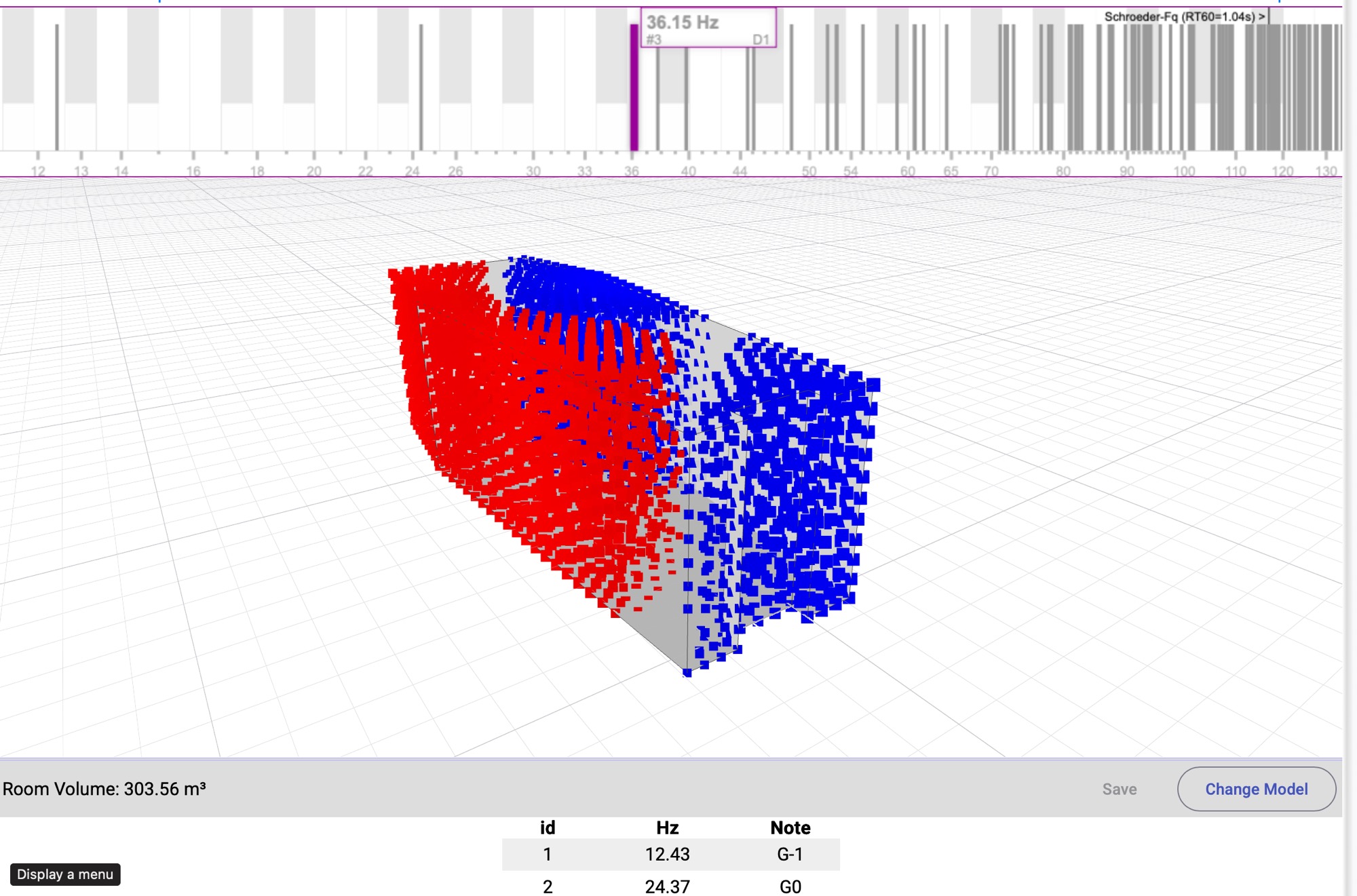
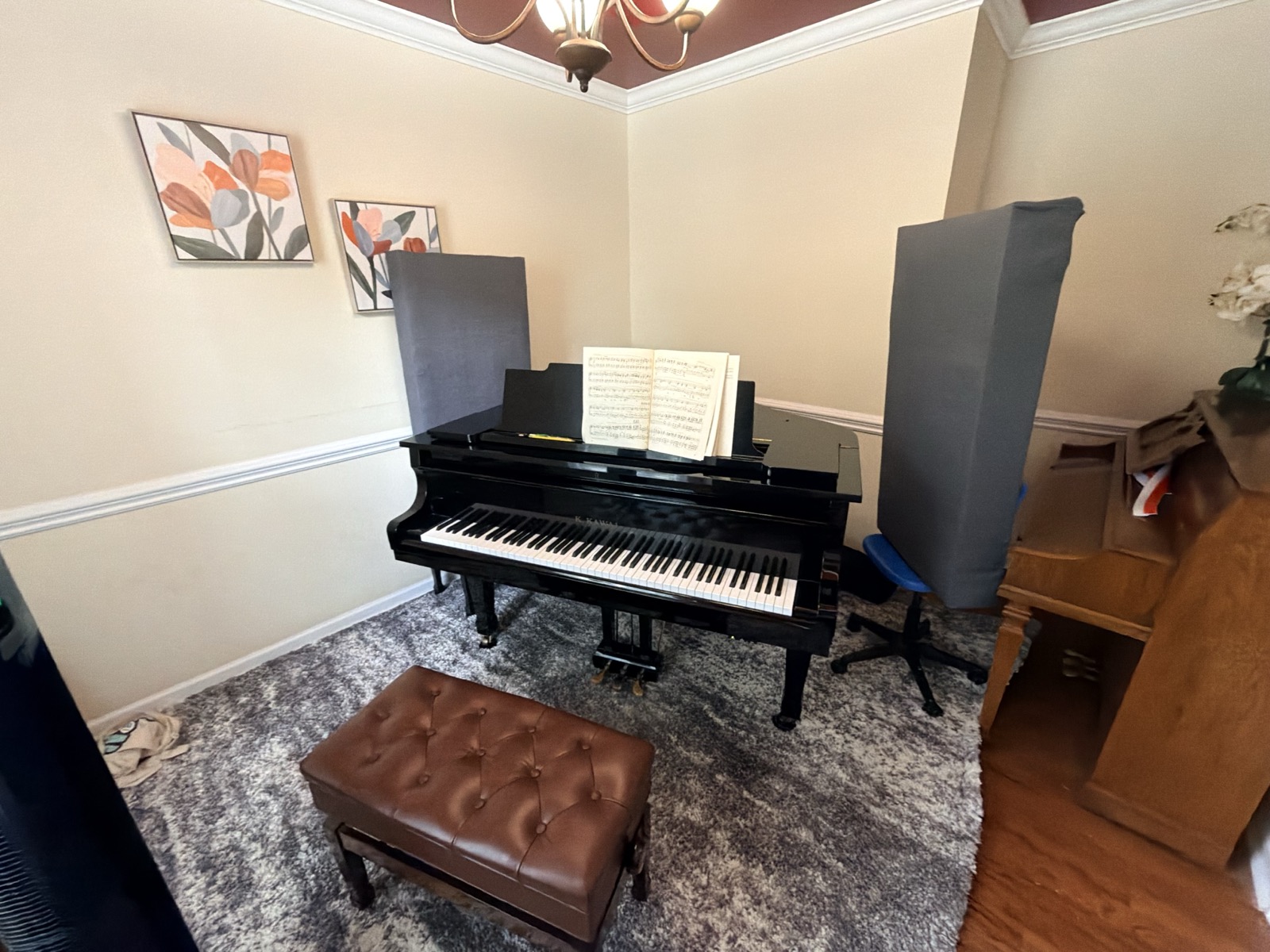
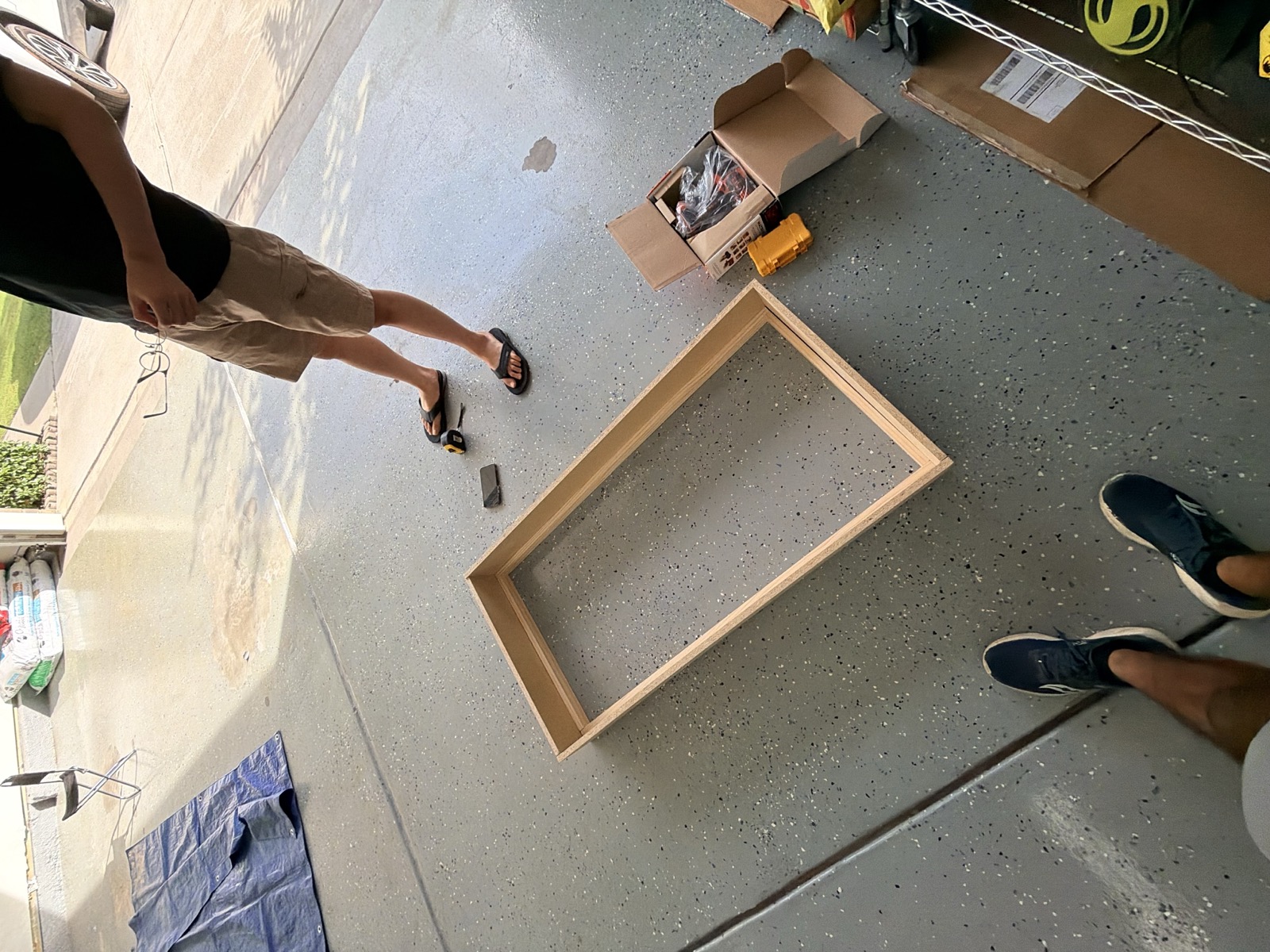
The recital hall where I trained had a live, boomy sound — hard walls and a low ceiling meant slap echo and poor speech/music clarity, especially near the back rows. A friend and I are treating it with Rockwool mineral-wool panels: dense, high-NRC absorption material that cuts mid-to-high frequency reverberation without deadening the room completely (a fully dead room sounds unnatural for piano). We worked out first-reflection points off the architectural floorplan — the spots on the side walls and ceiling where sound bounces directly from the piano to a listener's ear — since treating those points gives the most audible improvement per panel. We built the panel frames ourselves (pine frame, Rockwool core, acoustically transparent fabric wrap), learning basic woodworking and a lot of trial and error on how tightly to wrap the fabric without compressing the insulation and killing its absorption. Consulted with acoustics professionals along the way rather than guessing. No one is paying for this — it's a thank-you to my teacher, Dr. Michael Lehtinen. Still installing panels. The math behind it: we ran the hall's real (non-rectangular) geometry through AmRoc Pro, a finite-element room mode solver, rather than a simple rectangular calculator — the room isn't a plain box, so its resonant modes have to be solved numerically over the actual shape rather than read off the standard closed-form axial-mode equation. At 303.56 m³, the room's lowest modes sit around 12.4 Hz, 24.4 Hz, and 36.2 Hz — for example, the 36.2 Hz mode (visualized below) is a standing wave along the room's long axis, with a pressure antinode at each end (shown in red and blue, opposite phase) and a node in the middle where they cancel. Stand near an antinode and that frequency booms; stand near the node and it nearly disappears. That matters for what the panels can and can't fix. The room's Schroeder frequency — the crossover between individually audible resonant modes and a statistically diffuse, wave-density-dominated field — works out to f_s = 2000 x sqrt(RT60/V) = 2000 x sqrt(1.04/303.56) ≈ 117 Hz. Above that, the sound field is dense enough that broadband absorption (our Rockwool panels) directly improves clarity, which is what they're designed for. Below it, individual low-order modes like the ones above dominate, and thin panels absorb very little down there — real bass control needs thicker absorbers with an air gap behind them, or dedicated corner bass traps at the pressure antinodes. So the first-reflection panels are solving the mid/high-frequency clarity problem correctly, but the room's low-end boominess is a separate problem we're aware of and treating as future work, not something this phase claims to fix.
Rockwool Acoustic Modeling Woodworking